

The Column · September 2026
Start-up vs Business
Founders call any new venture a startup. Three criteria separate a startup from a business – and they decide how you raise money, hire people and incorporate.

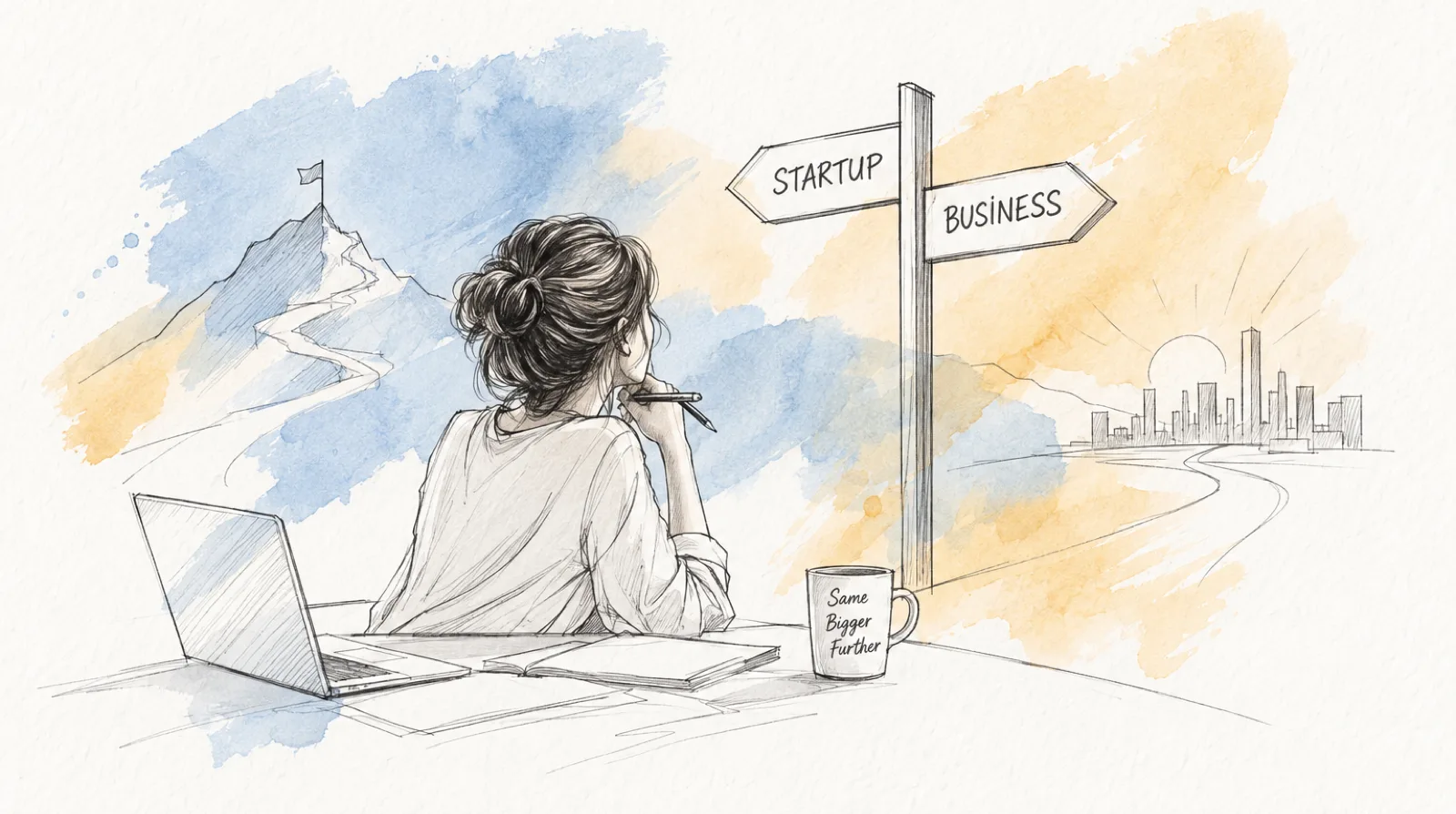
As a founder and also a startup consultant, I have seen hundreds of founders pitching their ideas. And there was one thing that really stood out – many founders don't understand the difference between a startup and a business.
Because the word "startup" comes from "to start" and means something fresh, founders often use it for any business idea they have. However, I think it is very important to know the difference, since it influences the way we build our companies: the way we fundraise, reach our customers, hire employees, etc.
There are many differences between startups and traditional businesses, but I like to underline three main criteria.
A startup invents a new way things are done
A startup invents a new business model or a new way things are done. For example, we used to get restaurant-made food either by going out and eating in a restaurant or getting takeout. We might have been able to call and make an order, but we would need to communicate with a particular restaurant to order food or reserve a table. An app like DoorDash changed the way we get a restaurant-cooked meal delivered to our table. So, a startup invents a new way people do things. A business, on the contrary, copies something that already exists. It might add new features or improve processes, but not much more.
A startup has technology inside that helps it scale
A startup always has technology inside that helps it scale. Usually, technology helps startups grow exponentially. For example, we used to order a taxi by calling and placing an order. A taxi company needed people to answer these calls, take orders, find drivers, and match one with the other. The more calls you got, the more managers the business needed and the more taxi cabs it needed. To grow that kind of business, a founder needed more capital expenditures – buy more cars, hire more people. With technology – an app and sharing economy principles – companies like Uber were able to grow exponentially without a similar growth in CAPEX.
A startup's market is huge
A startup's market is huge. It should be at least $1 billion so that a startup can potentially grab hundreds of millions of dollars of that market. So, as a founder, you should make sure there are enough potential clients who can buy your product every year and collectively spend hundreds of millions of dollars.
Just starting a new venture doesn't mean you're starting a technology company called a startup. There is nothing wrong with starting and running a business.
So, just starting a new venture doesn't mean you're starting a technology company called a startup. There is nothing wrong with starting and running a business – there are a lot of people who run businesses, make damn good money, and live happy lives.
It is important to know the difference from the beginning because startups and businesses are run differently. For example, startups need a lot of capital because they grow exponentially and need to support this growth. That's why they fundraise early, even when they don't have traction. Venture funds are their means of growth – they believe in crazy founders who promise to change the world and bring them a 10X return on their investment in five years.
A business can grow steadily, doesn't necessarily need a lot of capital (like hundreds of millions), and will probably never show a 10X ROI. That's why startups and businesses look for capital in different places.
Startups quite often hire their first employees for equity because they don't have cash, and potential candidates understand both the risks and the potential gains. Startups look for candidates on LinkedIn or in startup communities. Businesses, on the other hand, usually pay salaries and hire people on Indeed as well as LinkedIn. They don't typically give their first employees equity, but they might offer bonuses based on sales numbers.
The way a startup and a business are legally structured can also be different because they need to meet different goals. A C corporation, for example, allows a startup to attract an unlimited number of investors, issue equity, and have a board of directors, whereas an S corporation can meet the needs of a business that doesn't require an unlimited number of shareholders or the same structure for raising venture capital.