

The Column · October 2026
Start Before You Know How
I had never manufactured a physical product, and I didn't know anyone who had – I started a menstrual care company anyway. Most problems don't arrive all at once, and you don't need to know step 27 while you're still on step 8.

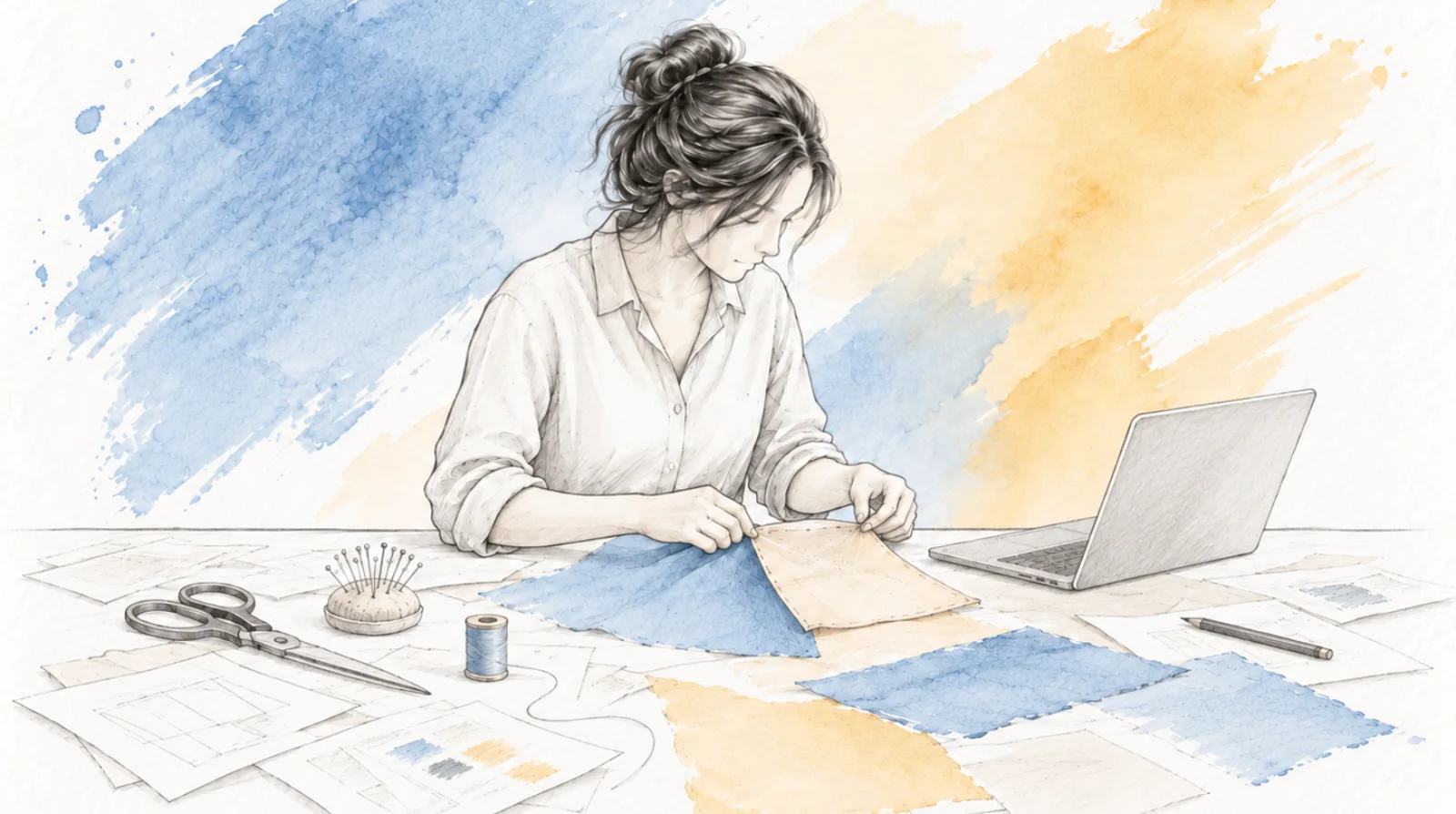
Late evening in December 2020, I was sitting in the kitchen with my husband. We were both exhausted after running around our 3 year old and taking care of our 8 month old. The kids were finally in bed, and I hesitantly asked my husband: “Do you think I can start an eco-friendly menstrual care company?”
He looked surprised, but responded: “I don’t see why you can’t”. I still remember this moment, almost 6 years later.
It was our first year in the US, although we were living away from our birth place, Siberia, for much longer. In our previous chapter, in Europe, we learned to care a lot about the environment and reducing the plastic pollution of our household: choosing to reuse our bags, skip single use plastic when buying produce and choosing cloth diapers for our children.
After moving to the US, it hit me almost all at once: how much more plastic we were throwing away, the loneliness of the ongoing pandemic, the return of my period after months of nursing, and realizing how much I dislike the menstrual products I used before that second pregnancy.
Every month I was throwing so much plastic, while successfully avoiding single use diapers for my baby.
I started looking at the menstrual care market differently. There were modern, appealing brands of reusable diapers for babies that made me feel like reusing was a cool, contemporary choice. I didn't see menstrual care products that made me feel the same way.
I didn’t jump straight to the idea of my own product. I tried and tried existing reusables out there – menstrual cups, discs, reusable pads. I went through a lot of options before I had a vision of how exactly my brand needs to combine the best of each product I tried while also positioning the reusables as a modern sustainable choice for millennials like myself.
There was one problem: I had never manufactured a physical product before. I didn't personally know anyone who had, either.
But I cared enough about the problem to start PlumThyme anyway.
Looking back, it wasn't the first or the last time I found myself in that position. I had started an e-commerce store back in Siberia by figuring out what needed to be done one step at a time. Years later, I started freelancing for UK startups as a localization manager without prior experience. After PlumThyme came a nonprofit supporting immigrants, and later a hormone health company.
Eventually, I noticed a pattern: almost every significant chapter of my professional life started in a strikingly similar way. I didn't know how to do what I had in mind, but I understood why I wanted to do it and believed I could figure things out along the way.
At the starting point of PlumThyme, all I had was the idea and a basic sewing machine. I didn’t know which materials were used to create the product I had in mind, so I researched the websites of existing brands, as well as taking apart and examining many of their physical products.
Then came the next question – where do I actually get those materials, and how do I make sure they are sustainably manufactured and free from chemicals I don't want in my product?
It turned out there was someone from the clothing industry with a YouTube channel who was sharing exactly this kind of knowledge, along with resources and Q&A webinars.
Once I understood enough about the materials, I hand-sewed a few prototypes and sent them to about a dozen friends to test.
Then the next problem became relevant: how do I find a factory that can manufacture this product? And what would a factory even need from me before they could begin?
Again, I found someone who could help. An entrepreneur offering consultations guided me through things I had never heard about before: tech packs, technical designers, communicating with factories. One step after another, I faced a problem, learned enough to solve it, and moved forward.
I didn't need to reach out to factories (what was perhaps step 27) before I knew whether my handmade prototypes (around step 8) actually worked. I didn't need all the knowledge required to run a consumer product company when I was sitting at home with a sewing machine trying to understand which fabrics belonged inside a reusable pad.
I needed the knowledge when it became relevant to the stage I was actually in. I think this is something we often miss when we are considering starting something new.
Before we begin, we can see all the potential problems at once. How will I make this? How much money will I need? What if nobody buys it? Where will I find customers? What about regulations, hiring, manufacturing, marketing? What happens if it grows? What happens if it doesn't? Our imagination can generate years’ worth of problems in one day.
In reality, most of those problems don't arrive at the same time. They arrive one after another. And by the time you reach some of them, you are no longer the same person who was just starting up. You know more, you have met people, you have made mistakes (which would absolutely happen). You have information you couldn't possibly have had before starting.
There may even be an advantage in not knowing everything at the beginning.
Yes, with complete knowledge of the journey and expertise in retail and manufacturing, I would probably spend less time figuring things out and would be more capable of bringing my vision to life from the very beginning. But I would also be acutely aware of every obstacle on the way.
Sometimes knowing a lot gives you 20 reasons not to begin before you've even encountered the first one.
As a beginner, you are willing to ask basic questions, look things up, contact people you don't know, learn something you had never heard about yesterday, and keep moving. And starting before you know how does not mean doing everything alone.
That first conversation with my husband mattered to me. So did the person sharing her knowledge on YouTube. So did the entrepreneur who explained manufacturing to me. So did the friends who agreed to test something I had sewn at home. It was an enormous support system I didn’t know I had while I was keeping my idea inside my head.
I’m not saying that being careless is the way to go. It’s important to consider your circumstances, how much financial stability you have, especially when raising a family or living in such an expensive place like the Bay Area. It also makes a lot of sense to research the relevant regulations and safety requirements of your potential venture. Some businesses also require significant capital from day one, and others come with barriers that can't simply be figured out later.
But there are also many things that do not need to be solved before you begin. And sometimes trying to solve all of them in advance doesn't make you more prepared, it simply makes the idea feel too complicated to attempt.
These days, when an idea comes to mind, I don't try to create a 5-year plan for bringing it to life. I ask whether the problem matters enough to me that I will want to keep going when the first struggle arises. I look for any fundamental barriers that I should understand before investing my time or money.
But after that, the question I care about most is very simple: do I know enough to take the next step?
I don't need to know how to do step 27 while I'm still on step 8. I can figure that out when I get there.