

The Column · September 2026
I didn't choose.
I was the only mother in my class at MIT who had her children there with her. This is how I got there – and why, seven years on, I'd do it all again.
There were other families in my program at MIT – plenty of them. But it was fathers who had brought their wives and kids to Cambridge, not mothers. The other women in my class either didn't have children yet, or had them and left them home with family while they came to study. I was the only woman who had hers there with her.
I don't know how many women with kids looked at this exact program, or any other master's program, and decided it simply wasn't possible for them. It's rarely a decision men in the same position have to make.
I wanted both. I wasn't willing to leave my kids behind, and I wasn't willing to leave the degree behind either. So I didn't choose. I just did both.
I grew up in Chelyabinsk, Russia, then studied and built a career in supply chain management in Moscow – full days at the office, night classes for a master's degree, years of proving myself in a field I genuinely loved. By my mid-twenties I was managing a team of people slightly older than me. Around me, everyone who wanted more from their career was chasing the same thing: an MBA, ideally from somewhere abroad, somewhere with a name that meant something the moment you said it out loud.
I wanted that too, for a while. Then I had a conversation that changed the direction of the wanting.
It was at a family gathering, over food, with my then-husband's aunt and uncle – an ordinary conversation, unplanned, the kind you don't see coming. They asked if I loved what I did. I said yes, without having to think about it. Then don't get an MBA, they told me. Get a master's in the thing you already love.
It landed immediately. I didn't sit with it or sleep on it. That same day I found MIT's supply chain management program. It felt completely unreachable – the kind of thing you bookmark and never expect to open again. I subscribed to their newsletter anyway. Not because I thought I'd get there, or would ever have enough money to afford it. Just because I wanted to keep watching.
About a year later, an email arrived: MIT was launching an online MicroMasters in supply chain management, a program that would count for half the credits of the on-campus degree I'd been quietly watching from the outside. I signed up within days, not long after my first daughter was born. I was part of the very first cohort. It felt surreal that I could touch my dream, even from afar.
I finished the online coursework mid-immigration. We were moving to the US on a Diversity Visa – not for a job, not for a school – and I studied through the packing, the move, the unpacking, a second pregnancy, and a birth. I sat the final exam with a newborn in the next room.
Then came a full-time job in Chicago, a real one, built from scratch in a country I'd barely lived in. It was good. It also had a ceiling: not enough US experience, no degree anyone here would immediately recognize.
Six months in, I started the application for MIT's on-campus program – the only graduate program I applied to. No backup, no portfolio of options.
While I waited to hear back, months of job searching landed me something better than I'd let myself dream about: a great offer, relocation to Virginia, negotiated up after I fought hard for it. Its deadline collided with MIT's. So I emailed MIT and asked them to release my results a week early. They did. I got in. The next day, I turned down the job I'd fought for, for a leap into the unknown.
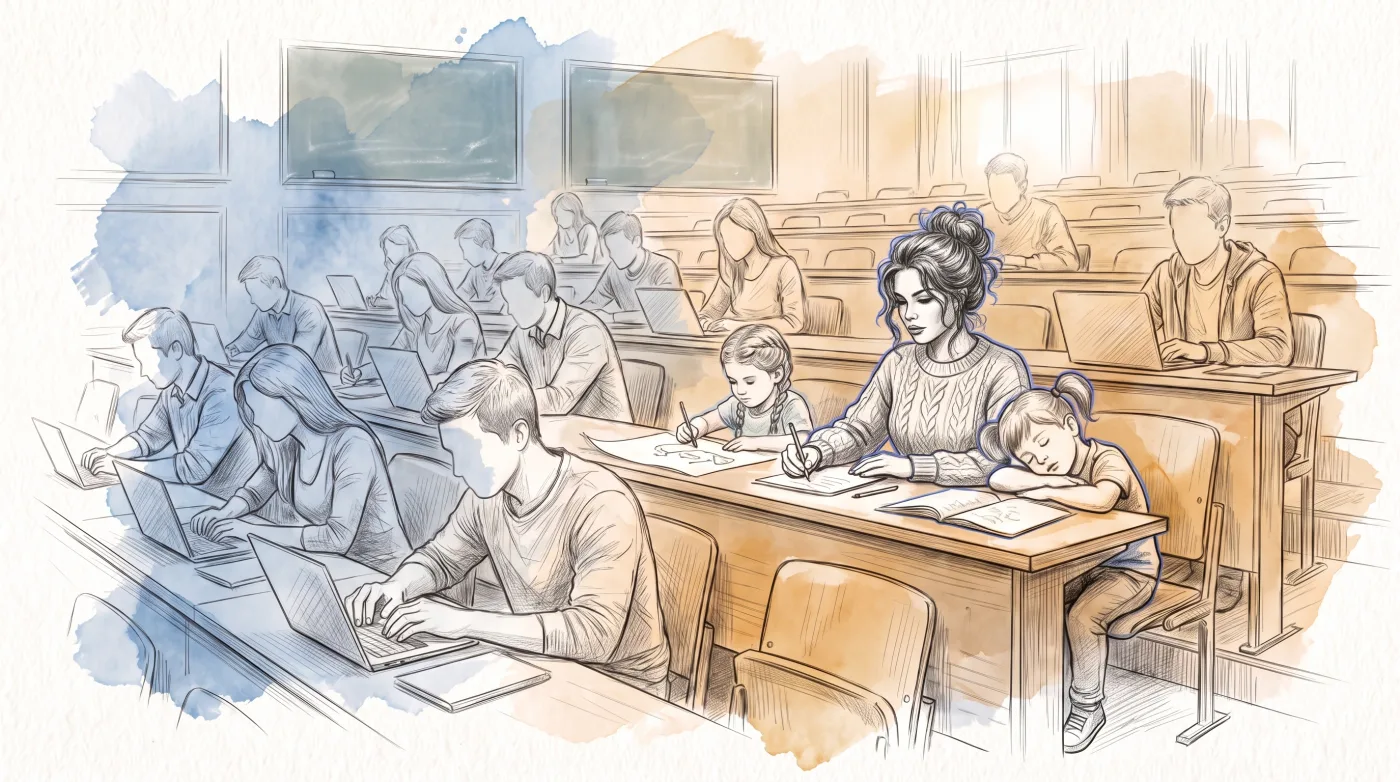
I decided early on that I wouldn't go anywhere without my kids. My then-husband, separately, decided he wouldn't stay without us – to keep the family together, not for my degree. We both quit our jobs. My mom left hers too, and came from Russia for several months to help, knowing what this chance meant to me. We moved, together, to Cambridge for one semester.
We spent savings that could have gone toward a house, took out a student loan for the rest, and neither of us worked for most of that year. The plan was to end the semester at zero – that part was calculated, and I knew it. What I couldn't calculate was whether a job offer would show up in time, and be good enough to justify all of it. I didn't know. I just knew this was the thing.
It wasn't a reckless bet. It was an enormous one that happened to land.
I barely saw my kids most days that semester. And I was happy. Inspired, actually. There was a lot of everything, all at once, and somehow none of it felt like too much. I loved nearly every minute.
I asked myself the hard question back then, in real time, while I was still living it – I wrote it down once, during that semester. Did I feel like I was missing something in my kids' lives, even with them right there with me? Yes. Did I regret chasing this, difficult as it was for all of us? Not for a single day.
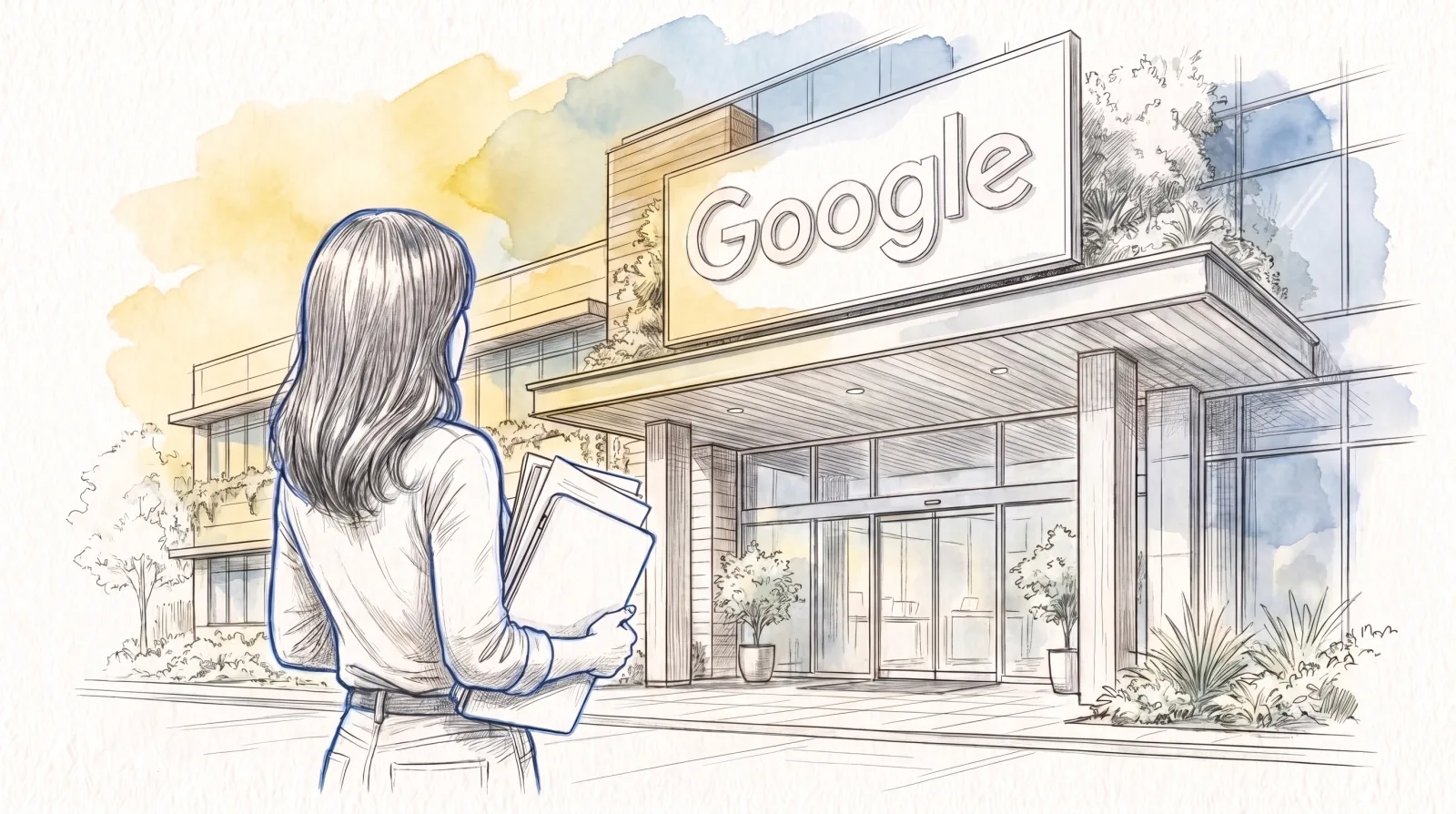
Less than two months before graduation, with our bank account about as close to empty as it had ever been, I got an offer from Google – relocation package included, landing at almost exactly the moment we needed it to. My net worth, the week I started, was negative: barely anything in checking, the full student loan outstanding, repayment about to begin.
It was a good decision. I don't say that with any hesitation, and I never have. If I knew in advance exactly how it would turn out, I would make the same choice a thousand times over. It wasn't a reckless bet. It was an enormous one that happened to land.
I'm not sure I'd take a bet like that today. Not because I was wrong back then – because I have more to protect now, more built, more settled. There's a season in life for that kind of bet, and I don't think this is mine anymore. That doesn't make the earlier version of me foolish. She had just as much to lose – more, in some ways. She was simply willing to risk it in a way I might not be today.
What I know for certain, without any hedge in it: it was the best decision of my life. It changed the trajectory for me and for my kids, permanently – not just financially, though it did that too, but in every direction a life can turn. Seven years later, the answer hasn't moved an inch.
Looking backward, a life looks like a straight line: one thing led to the next, and here you are. Looking forward, from any single point, there is no line – only a fan of choices, and no way of knowing which one is right. That judgment only exists later, once the line has already been drawn. I trusted something in myself I couldn't back up with numbers, and let that be enough. That kind of courage usually looks like recklessness while it's happening.
I don't know if I'll get another decision like that one. But I know I'll recognize it if it comes – not because it will make sense, but because it won't, and I'll want it anyway.