

The Column · September 2026
Aim vs. Dream: Why Most People Get Stuck and How to Move Forward
Dreams inspire, aims move. Most procrastination is fear in disguise – three questions turn a someday into a step you can take this week, and the career tool nobody talks about is other people's goals.

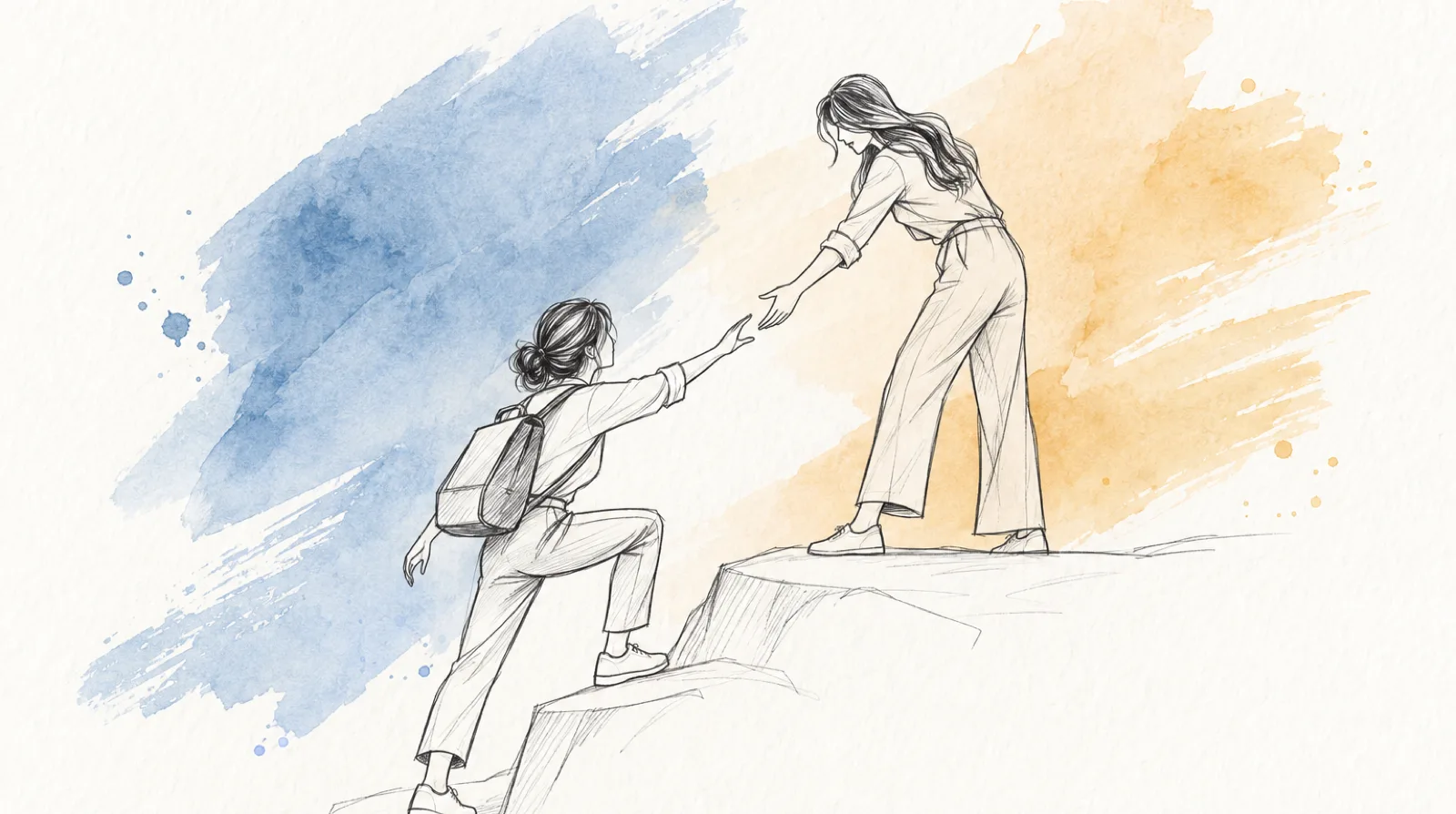
Everyone has dreams, whether it's becoming a C-suite executive, launching a company, joining a venture fund, building financial independence, moving to a new country, writing a book, or creating something meaningful.
The problem is that dreams are often too big to act on. They inspire us, but they can also overwhelm us.
An aim is different. A dream is where you want to go someday, while an aim is what you are actively working toward today.
Over the years, I have learned that most procrastination is not caused by laziness. More often, it stems from a lack of clarity. When the destination feels too far away, we become overwhelmed by the size of the challenge. We delay taking action, wait for the perfect moment, and convince ourselves that we will start next month, next quarter, or next year.
The reality is simple: dreams create inspiration, but aims create progress.
The hidden reason we procrastinate
When people tell me they have lost interest in something, I often challenge them to think a little deeper. Did they truly lose interest, or are they afraid?
Fear has a way of disguising itself as logic. It shows up as fear of failure, fear of rejection, fear of looking inexperienced, or fear of making the wrong decision. The bigger the dream, the more intimidating it can feel.
Instead of taking action, we stay busy with everything except the thing that matters most. We answer emails, attend meetings, organize our to-do lists, and tell ourselves we are being productive. Meanwhile, the goal that truly matters remains untouched.

Turn the dream into an aim
Whenever I feel stuck, I ask myself three simple questions.
What exactly do I want? Not in five years. Not someday. What do I want right now?
What is preventing me from getting there? Being honest with yourself is critical. Most obstacles are not external. They are often assumptions, fears, self-imposed limitations, or stories we tell ourselves about why something is not possible.
What is the smallest step I can take this week? Not next month. Not when conditions are perfect. This week.
Big goals become achievable when they are broken into smaller, measurable actions. Whether your ambition is to become a partner, an executive, a founder, or an investor, success rarely happens in one dramatic leap. It happens through hundreds, or even thousands, of small decisions made consistently over time.
The most powerful career tool nobody talks about
One lesson that took me years to learn is that success is rarely an individual sport.
Every founder, investor, executive, client, mentor, and colleague has goals of their own. The most successful professionals are not simply focused on achieving their own objectives. They understand how to align interests, build relationships, and create value for others along the way.
As professionals, we often become focused exclusively on our own goals. Yet every person around us is working toward something as well. The real magic happens when those goals intersect.
Understanding what motivates other people is one of the most underrated career skills. Whether you are building a company, leading a team, raising capital, serving clients, or advancing within an organization, progress tends to accelerate when everyone involved benefits.
Ask yourself: Who can help me get where I want to go? How can I help them achieve their goals? Where do our interests align?
Many opportunities come not from asking for favors, but from creating mutual value. The strongest professional relationships are built when both sides become invested in each other's success.
What my career taught me about goals
Looking back, none of the biggest milestones in my career happened exactly the way I planned them.
Moving to the United States was one of the biggest transitions of my life. Many of the accomplishments I had worked hard to achieve suddenly felt less relevant. I had to build a new network, adapt to a different environment, obtain my CPA license again, and prove myself all over again.
Building expertise in technical accounting and IPOs, leading teams, becoming a Managing Director, serving as a Chief of Staff, contributing to boards, and helping build professional communities all felt far away at different points in that journey.
There were setbacks. There were periods of uncertainty. There were times when progress felt painfully slow.
Like many professionals navigating significant transitions, there were moments when the larger dream felt overwhelming. What helped was not focusing on the entire journey. Instead, I focused on the next achievable step.
During those periods, goals became my anchor. When circumstances changed, the goal remained. When one path closed, the goal helped me identify another.
I've learned that goals do not eliminate challenges. What they do provide is direction. And when uncertainty appears, direction is often exactly what we need.
Keep moving
One of my favorite observations is that momentum creates momentum.
You do not need to have all the answers before taking action. You do not need a perfect plan, complete certainty, or a roadmap for every possible outcome. What you need is movement.
Sometimes the next step will be small. Sometimes your goals will evolve. Sometimes you will realize that the dream you had five years ago is no longer the dream you have today. That is perfectly normal.
Growth often changes the destination, and that is part of the journey. The important thing is to keep moving forward.
A few questions to consider
As you think about your own goals, consider the following:
What is a dream I keep talking about but have not translated into action?
What fear might be creating resistance?
What is one specific action I can take this week?
Who can help me move forward, and how can I create value for them in return?
Dreams are important because they provide inspiration. However, aims are what ultimately change our lives.
The people who achieve extraordinary things are not always the smartest, luckiest, or most connected. More often, they are the people willing to take the next step, even when the entire path is not yet visible.
Looking back, none of my biggest career milestones happened because of one extraordinary moment. They were the result of hundreds of small decisions made consistently over time.
Dreams create direction. Aims create momentum. Action creates results.
If there is something you have been postponing, stop focusing on the entire journey. Identify the next step and take it. The future is often built one conversation, one opportunity, one relationship, and one decision at a time.